
Standing With Clients.
Fighting for Justice for
Over 25 Years.
Fighting for Justice for
Over 25 Years.

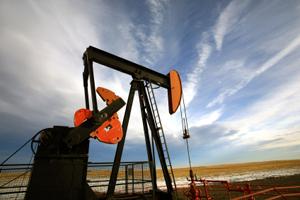
Serious industrial accidents do not happen only in cities. They happen on farms and in orchards, in timber operations and food processing plants, in confined spaces and on construction sites across rural Oregon and Washington. Kaplan Law represents seriously injured workers and their families throughout both states, wherever the work is done.
| Accepting Workers’ Compensation Does Not End Your Legal Options Workers’ comp and a third-party civil claim are separate legal tracks that run simultaneously — filing one does not close the door on the other. If a contractor, equipment manufacturer, property owner, or another employer’s worker contributed to your accident, a civil claim against that party is available on top of any workers’ comp benefits you are receiving. That distinction matters enormously: workers’ comp does not cover pain and suffering, does not replace your full lost earning capacity, and does not account for a lifetime of future costs. A third-party civil claim does. Oregon and Washington each have their own statutory formula governing how the workers’ comp lien is handled when you recover from a third party — and understanding that formula is essential to maximizing your net recovery. |
| Oregon Safe Employment Act (ORS 654.010 / ORS 654.015) Oregon’s workplace safety law imposes broad duties on employers to provide a safe workplace, safe equipment, and adequate training and supervision. Violations of the OSEA create civil liability when a third party was responsible for the unsafe condition, whether at a manufacturing facility or a rural agricultural operation. |
| Oregon Employer Liability Law (ORS 654.305) The ELL imposes liability on any person, including owners, general contractors, and subcontractors, who has the right to control the conditions that caused the injury. It extends liability beyond the direct employer to every party in the chain of control, whether that is a general contractor on a job site, a farm labor contractor, or a processing facility operator. |
| Washington Third-Party Claims Washington’s workers’ compensation system operates through the Department of Labor and Industries. Accepting L&I benefits does not bar a civil claim against a third party whose negligence contributed to the injury. Southwest Washington workers injured by third-party negligence have the same right to full civil recovery as any other injured worker. |
| Product Liability for Defective Equipment When a machine, tool, or piece of farm or industrial equipment malfunctions and causes a serious injury, the manufacturer, distributor, or seller may be liable regardless of who your employer was. |
When you recover money from a third party through a civil lawsuit or settlement, the workers’ compensation insurer or L&I does not simply take it all back. Both Oregon and Washington establish a mandatory distribution formula that guarantees the injured worker a minimum share of the recovery, regardless of how much the workers’ comp insurer has paid.
| Oregon Lien Formula — ORS 656.593 Step 1: Attorney fees and litigation costs are paid first from the gross recovery. Step 2: The worker receives a guaranteed minimum of 33⅓% of the remaining balance. Step 3: The paying agency (SAIF or the workers’ comp insurer) receives the remainder, but only up to the amount it has actually paid in compensation benefits plus the present value of reasonably expected future expenditures. Step 4: Any balance remaining after the lien is satisfied goes to the worker. The practical result: even in cases where the workers’ comp insurer has paid significant benefits, the injured worker retains at minimum one-third of the net recovery — and often substantially more when the third-party recovery exceeds the total lien. |
| Washington L&I Lien Formula — RCW 51.24.060 Step 1: Attorney fees and litigation costs are paid proportionately from the gross recovery. Step 2: The worker receives a guaranteed 25% of the remaining balance. Step 3: L&I or the self-insured employer receives the balance of the recovery, but only to the extent necessary to reimburse benefits already paid — not future benefits. Step 4: Any excess after reimbursement is returned to the worker. Important: Under Tobin v. Department of Labor & Industries (Washington Supreme Court, 2010), L&I cannot recover any portion of settlement funds specifically apportioned to pain and suffering. Structuring the settlement to properly allocate pain and suffering damages is a critical strategic step in every Washington third-party case. |
| Washington L&I Lien Formula — RCW 51.24.060 Step 1: Attorney fees and litigation costs are paid proportionately from the gross recovery. Step 2: The worker receives a guaranteed 25% of the remaining balance. Step 3: L&I or the self-insured employer receives the balance of the recovery, but only to the extent necessary to reimburse benefits already paid — not future benefits. Step 4: Any excess after reimbursement is returned to the worker. Important: Under Tobin v. Department of Labor & Industries (Washington Supreme Court, 2010), L&I cannot recover any portion of settlement funds specifically apportioned to pain and suffering. Structuring the settlement to properly allocate pain and suffering damages is a critical strategic step in every Washington third-party case. |
| AGRICULTURE | Farms, orchards, vineyards, and packing sheds Tractor and equipment rollovers, machinery entanglement, confined spaces, and fall injuries are leading causes of serious harm. Oregon agriculture reports amputation injuries at 2.8 times the national average. |
| TIMBER AND LOGGING | Logging operations and mill work Falling trees, equipment failures, and mill machinery accidents produce catastrophic injuries. Logging consistently ranks among the most dangerous occupations in the United States. |
| CONFINED SPACES | Explosions, toxic atmosphere, and entrapment Industrial facilities and agricultural processing plants throughout rural Oregon and Washington present confined space hazards. Kaplan Law has obtained a $6 million settlement in a hydrogen generator explosion and a $1 million settlement in an Oregon confined space explosion case. |
| CONSTRUCTION | Falls, electrocution, and equipment failures Falls from elevation are among the leading causes of construction fatalities. Scaffold failures, inadequate fall protection, and defective equipment create liability against multiple job site parties. |
Oregon reported 54 worker fatalities in 2023, with agriculture, forestry, and manufacturing reporting injury rates substantially above the statewide average. Washington’s agricultural and industrial sectors record similarly elevated rates. The injuries that result from serious industrial accidents are among the most catastrophic in personal injury law: amputations, severe burns, paraplegia and quadriplegia from spinal cord damage, and traumatic brain injuries. These are permanent, life-altering consequences that demand a recovery built around a lifetime of need, not a workers’ comp schedule.
| $6,000,000 Settlement — hydrogen explosion, Corvallis industrial facility | $1,000,000 Settlement — confined space explosion in agricultural processing plant in Morrow County, Oregon |
| $500,000 Settlement — confined space industrial wrongful death in Gilliam County, Oregon |
Distance is not a barrier. Kaplan Law represents seriously injured workers throughout Oregon and Southwest Washington. Call (503) 226-3844 or reach out online to speak directly with Matthew. There is no fee unless and until he wins your case.